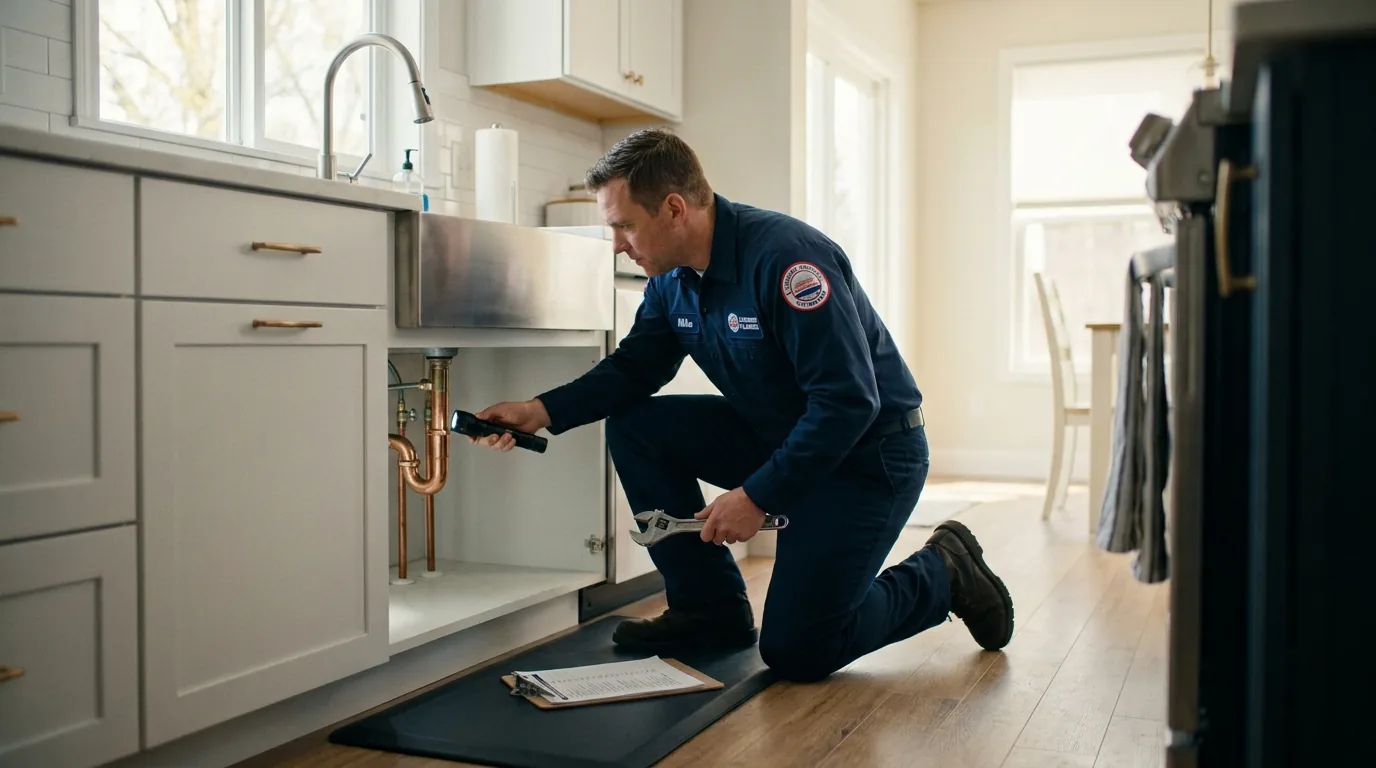
Most homeowners never think about their plumbing until something breaks, and by then the damage is done. The numbers show why that's a costly habit. According to the U.S. Environmental Protection Agency (EPA), a single faucet dripping once per second wastes roughly 3,000 gallons of water a year, and a running toilet can waste up to 30 gallons a day.
Here's the part that matters: most plumbing failures are preventable. Homeowners who spend around $300 a year on preventive care typically avoid emergency repairs that run $2,000 to $5,000 or more. This guide covers everything you need to keep your plumbing in top shape, from seasonal checklists to knowing exactly when to call a pro.
Why Routine Plumbing Maintenance Matters
Your plumbing works hard every day. Water runs through dozens of feet of pipe, valves, and joints before reaching your fixtures, and all that use creates wear over time.
Small problems grow into big ones when they go unnoticed:
- A slow drain today becomes a complete blockage next month.
- A pinhole leak behind a wall causes mold and structural damage long before a water stain appears.
- A neglected water heater fails years earlier than one that's serviced annually.
The cost gap is dramatic. Professional drain cleaning runs $150 to $350. Ignore the same issue and a sewer line repair can hit $6,300 or more once digging and restoration are added in. Regular maintenance also extends the life of your water heater, pipes, and fixtures, often saving you from a premature whole-house repiping job.
How Often Should You Schedule Plumbing Maintenance?
For most homes, once a year is right. Some homes need more attention:
| Home Type / Condition | Recommended Frequency |
|---|---|
| Most homes | Once per year |
| Built before the 1970s with galvanized steel lines | Twice per year |
| Surrounded by mature trees | Twice per year |
| Hard water areas | Annual water heater flush, plus consider a softener |
Galvanized pipes corrode from the inside out, and that corrosion speeds up as they age. Tree roots naturally seek moisture and invade sewer lines through tiny cracks in joints. And hard water, high in calcium, magnesium, and iron, shortens the life of water heaters and fixtures, so a filtration system protects your whole plumbing setup.
What Does a Routine Plumbing Maintenance Visit Include?
A thorough inspection covers every major component of your system:
- Inspect pipes and joints for leaks. The plumber checks exposed pipes under sinks, behind toilets, near the water heater, and around appliances for moisture, corrosion, water stains, and mold. Hidden leaks behind walls or under slabs may need specialized leak detection equipment.
- Test water pressure. Safe home pressure is 40 to 60 psi.
- Above 80 psi: strains pipes and joints, causing pinhole leaks and premature failure.
- Too low: may signal a hidden leak, a failing pressure regulator, or mineral buildup.
- Flush the water heater. Sediment settles at the bottom of a tank, reduces efficiency, and causes rumbling or discolored hot water. Flush tank units once a year; descale tankless units every 1 to 2 years depending on water heater water hardness.
- Clean drains and check for slow drainage. Hair, soap scum, grease, and food debris restrict flow over time.
- Light buildup: flush with hot water, then a baking soda and vinegar mix.
- Stubborn or recurring clogs: professional drain cleaning or hydro jetting.
- Test shutoff valves. Valves seize up when unused for years. Turn the main valve, and each fixture valve under sinks, behind toilets, and near appliances, off and back on at least once a year. Tag the main valve clearly so anyone in the household can find it in an emergency.
- Inspect supply lines and washing machine hoses. Flexible supply lines develop bulges, cracks, and corrosion. Rubber washing machine hoses are a leading cause of home water damage. They can burst without warning and release hundreds of gallons per hour. Replace rubber hoses with braided stainless steel versions every five years.
- Check toilets, faucets, and fixtures. A running toilet alone can add $50 or more a month to your bill. Replacing a worn flapper valve usually fixes it and costs just a few dollars in parts.
Seasonal Plumbing Maintenance Calendar
Spreading tasks across the year keeps the workload manageable and your system protected in every condition.
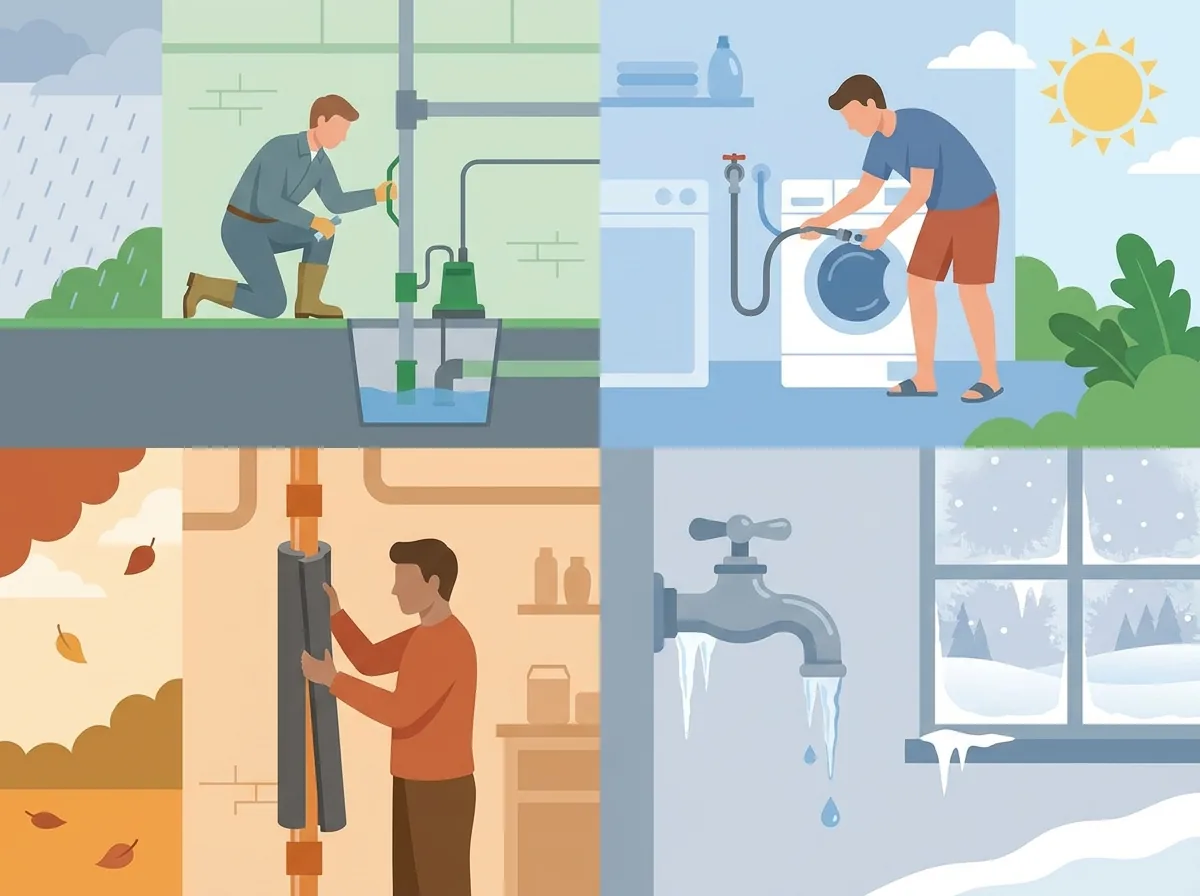
Spring: Check for Winter Damage
- Inspect exposed pipes in basements, crawl spaces, and utility areas for cracks, corrosion, or moisture.
- Test the sump pump by pouring water into the pit and confirming it activates and drains.
- Check outdoor hose bibs for freeze damage before connecting garden hoses.
- Run water through fixtures unused over winter to flush out stagnant water.
Summer: Handle Peak Water Demand
- Inspect washing machine hoses before heavy summer laundry.
- Check irrigation sprinkler heads for leaks or broken components.
- Clean the garbage disposal, running cold water for 30 seconds after each use, and keep grease, fibrous vegetables, and bones out.
Fall: Prepare for Freezing Weather
- Disconnect and drain all outdoor garden hoses.
- Shut off water to exterior hose bibs if you have interior shutoffs for them.
- Insulate exposed pipes in garages, crawl spaces, basements, and along exterior walls with foam sleeves.
- Schedule a professional inspection and water heater service before the cold arrives.
- Have your sewer line camera-inspected for root intrusion before the ground freezes.
Winter: Prevent Frozen Pipes
- Keep the thermostat at 55°F or higher, even when away.
- During extreme cold, let faucets on exterior walls drip slowly to relieve pressure.
- Open cabinet doors under sinks so warm air reaches the pipes.
- Watch for warning signs: reduced flow, frost on exposed pipes, or unusual sounds when a faucet runs. Our guide on why pipes burst covers the full list of warning signs and what to do if one fails.
If a pipe freezes or bursts, knowing where your main shutoff valve is, and having a 24/7 emergency plumber on call, is the difference between minor damage and a flooded home.
DIY vs. When to Call a Professional
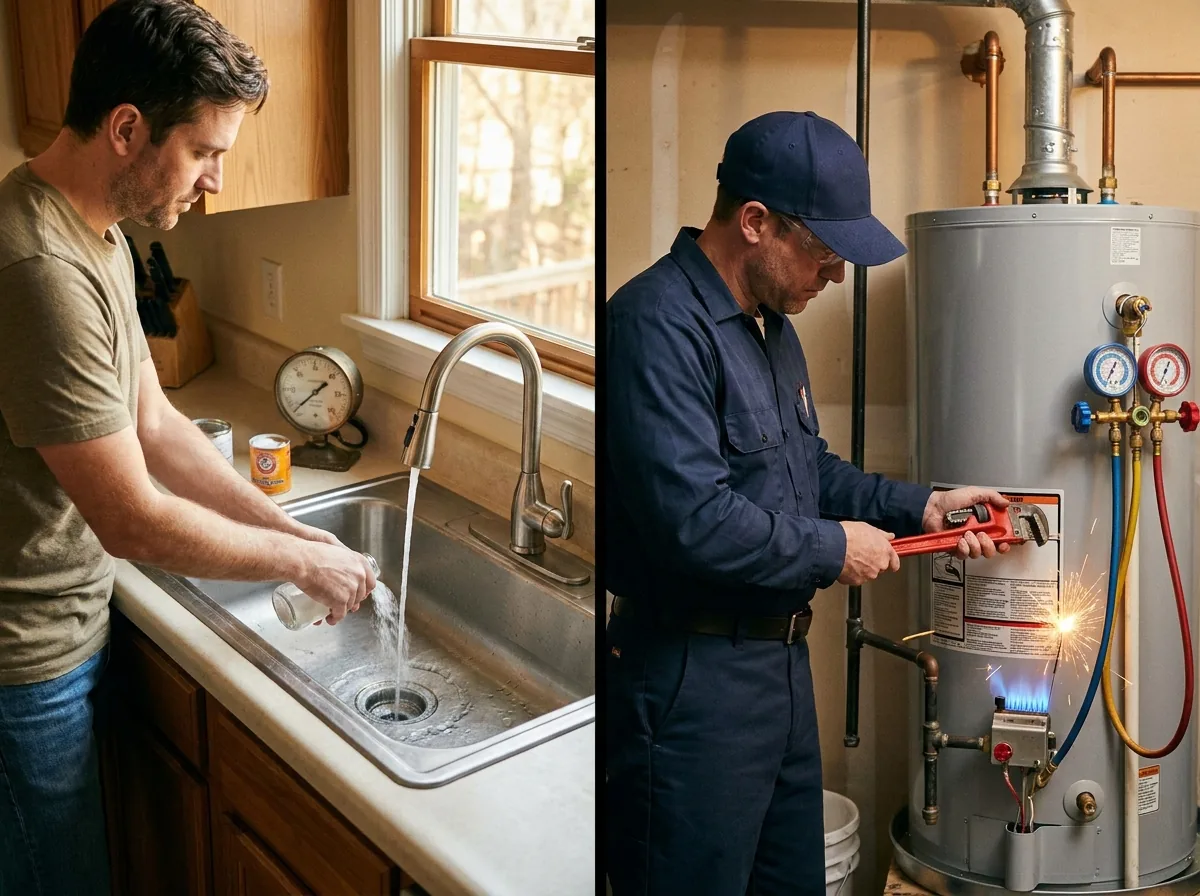
Many tasks are safe to do yourself. Others need a licensed plumber with the right tools and training.
| Task | DIY-Friendly | Call a Pro |
|---|---|---|
| Visual leak inspection | ✓ | – |
| Drain flushing (baking soda + vinegar) | ✓ | – |
| Water pressure testing with a gauge | ✓ | – |
| Shutoff valve testing | ✓ | – |
| Washing machine hose checks | ✓ | – |
| Toilet flapper replacement | ✓ | – |
| Water heater flushing (especially gas) | – | ✓ |
| Persistent or recurring clogs | – | ✓ |
| Sewer line inspections | – | ✓ |
| Anything behind walls or underground | – | ✓ |
| Backflow testing | – | ✓ |
| Pipe repair or replacement | – | ✓ |
Rule of thumb: if the task involves pressurized water, gas connections, or components you can't see, call a pro.
How Much Does Plumbing Maintenance Cost?
A professional inspection typically runs $150 to $300 depending on home size and complexity, and takes one to two hours. Budget $300 to $500 a year for comprehensive maintenance: inspection, minor fixes, and one drain cleaning.
That annual spend looks tiny next to the emergencies it prevents:
| Preventive Action | Preventive Cost | Problem It Prevents | Cost If Ignored |
|---|---|---|---|
| Annual inspection | $150–$300 | Emergency repairs | $2,000–$5,000 |
| Professional drain cleaning | $150–$350 | Sewer line blockage/repair | $6,300+ |
| Fix a small leak early | ~$50 | Water damage, mold, structural | $10,000+ |
| Replace toilet flapper | A few dollars | Wasted water | +$50/month |
| Replace aging supply hoses | ~$20 | Flooding from a burst hose | $1,000–$4,000 |
Many companies offer annual maintenance plans that bundle inspections, priority scheduling, and repair discounts. These often pay for themselves with a single prevented emergency.
Signs Your Plumbing Needs Maintenance Now
Don't wait for your next scheduled visit if you notice any of these:
- Slow drains across multiple fixtures: a blockage deeper in your system.
- Reduced water pressure throughout the house: a hidden leak, failing regulator, or corroded pipes.
- Discolored or rusty water: internal pipe corrosion.
- Gurgling sounds from drains or toilets: trapped air from a partial blockage or venting issue.
- An unexplained spike in your water bill: one of the clearest signs of a hidden leak.
- Foul odors near drains: a dry trap, a clog, or a sewer line problem.
- Green staining on copper pipes or white crusty deposits at joints: corrosion and mineral buildup.
- Water stains on walls or ceilings: a leak already causing damage behind the surface.
Spot any of these? Professional leak detection and a full assessment can find the source before it gets worse.