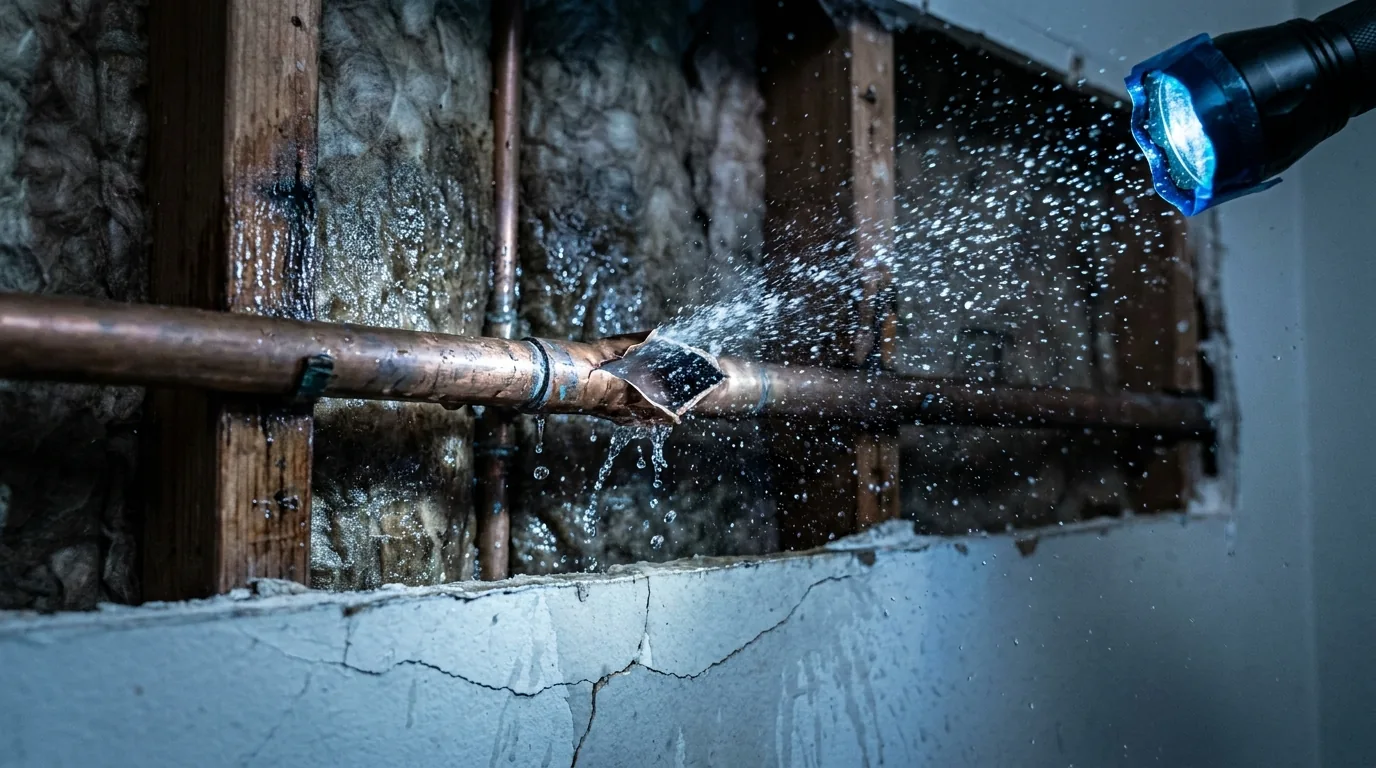
Pipes burst when the pressure inside them becomes more than the pipe material can handle. This can happen because of freezing water, high water pressure, old corroded pipes, clogs, or even tree roots pushing against underground lines. The American Red Cross reports that more than 250,000 families across the United States deal with frozen or burst pipes every single year. A single burst pipe can flood entire rooms, ruin personal belongings, and lead to mold growth within days.
Understanding why pipes burst is the first step toward protecting your home. In this guide, you will learn the most common causes, how to spot the warning signs early, and what you can do to prevent a costly pipe failure in any season.
What Causes Pipes to Burst?
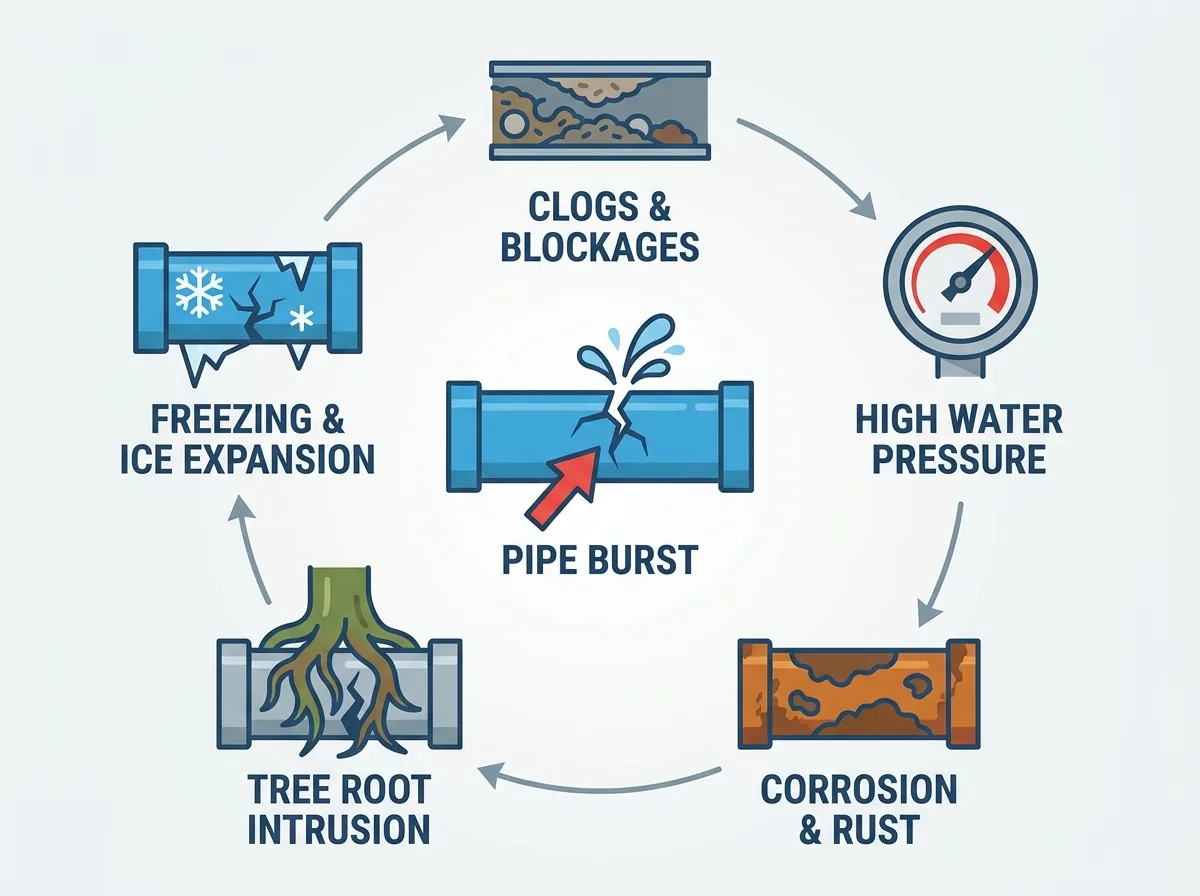
Every pipe failure comes down to one basic problem. Something creates more pressure than the pipe can hold. That pressure can come from inside the pipe, such as frozen water expanding or a clog building up, or from outside, such as tree roots pushing in or soil shifting around underground lines. Here are the most common reasons your pipes can fail.
Freezing Temperatures
Cold weather is the number one reason pipes burst in the United States. When water freezes, it expands by about 9 percent. That expansion creates enormous pressure inside the pipe. The pipe does not actually crack at the point where ice forms. Instead, pressure builds between the ice blockage and a closed faucet downstream. That trapped pressure is what splits the pipe wall or blows out a weak joint.
Research conducted by the Building Research Council at the University of Illinois found that uninsulated pipes in unconditioned attics begin to freeze when the outdoor temperature falls to 20°F or below. Pipes in crawl spaces, basements, garages, and along exterior walls face the highest risk. Even plastic piping like PEX, while more flexible than copper, is not immune to ice blockages.
High Water Pressure
Water pressure in a home plumbing system should stay between 40 and 60 psi (pounds per square inch). Anything above 80 psi puts serious strain on pipe walls, joints, and fixtures. Faulty pressure regulators, sudden changes in municipal water supply, or a malfunctioning backflow device can all push pressure past safe levels.
Over time, excess pressure creates tiny pinholes in pipe walls. Those pinholes grow into cracks. Eventually, the pipe ruptures. A pressure regulator is the most reliable fix. You can also check your home's current pressure by attaching a simple gauge to any outdoor faucet.
Pipe Corrosion and Aging
Every pipe has a limited lifespan. Galvanized steel and iron pipes corrode from the inside out as they react with water, minerals, and chemicals. Hard water with high levels of calcium, magnesium, and iron speeds up this process by leaving mineral deposits, or scaling, along the pipe walls. That scaling narrows the internal diameter, restricts water flow, and increases pressure.
Homes built before the 1960s often have galvanized steel plumbing, which is more prone to rust and failure. Here is a general guide to how long different pipe materials last: PEX lasts 20 to 50 years, galvanized iron lasts 40 to 50 years, copper lasts 50 years or more, CPVC lasts 50 to 80 years, and PVC lasts 75 years or more. Cast iron drain lines typically last 50 to 75 years.
If your home has older pipes approaching these limits, repiping with modern materials like PEX or copper may be the best long term solution.
Water Hammer
Water hammer is a loud banging or clanging sound you hear inside walls when an appliance shuts off water flow suddenly. A dishwasher or washing machine valve closing fast sends a hydraulic shockwave through the supply lines. That shockwave slams pipes against surrounding framing, beams, or other plumbing components.
One instance of water hammer will not crack a pipe. Repeated hammering over months or years, however, loosens joints and weakens connections until one finally gives out. Installing a water hammer arrestor on the supply and drain lines of the appliance causing the problem is the standard solution.
Clogs and Blockages
A clogged pipe does more than slow your drain. Accumulated grease, hair, soap scum, food debris, or foreign objects restrict the passage inside the pipe. Water pressure builds behind the blockage. The longer a severe clog sits untreated, the more it strains the pipe walls. Blockages in narrow sections or bends create the worst pressure buildup and are most likely to cause a rupture.
Regular maintenance and mesh drain screens help prevent clogs before they become emergencies. For stubborn or recurring blockages, professional drain cleaning clears the line without damaging the pipe.
Tree Root Intrusion
Tree roots naturally seek out moisture and nutrients underground. When roots find even the smallest crack or loose joint in a sewer or water line, they push their way inside. Once in, they expand and create a growing blockage that obstructs water flow and puts constant pressure on the pipe from within.
Clay pipes and older materials are especially vulnerable to root damage. Before planting trees or shrubs near your home, always call 811, known as "Call Before You Dig," to locate underground utility and plumbing lines. A video camera inspection can also reveal root intrusion before it leads to a full break.
Poor Installation or Substandard Repairs
Not every plumbing job is done right. Faulty soldering, misaligned fittings, wrong coupling sizes, or incompatible pipe materials all create weak points that may hold for a while but eventually fail under normal water pressure. DIY plumbing repairs using incorrect parts are a common source of problems that show up months or even years later.
Always work with a licensed plumber for any installation or repair involving your home's supply or drainage lines.
Soil Shifting and Foundation Movement
Underground pipes face threats from the ground around them. When the water table rises and falls, it creates hydrostatic pressure against your home's foundation and the surrounding soil. Heavy rains saturate the ground and push against buried pipes. Extended dry periods do the opposite, compacting and cracking the soil, which removes the natural support holding pipes in place.
This constant shifting puts physical stress on main water supply lines going into the house and outgoing drainage lines. French drains around the foundation can help manage water flow and reduce the impact of soil movement on underground plumbing.
At What Temperature Do Pipes Burst?
Water freezes at 32°F (0°C), but that alone does not mean your pipes will fail immediately. The insulation of your home, the location of your pipes, and how long the cold lasts all play a role.
At 32°F, insulated pipes can take about 12 hours to freeze. Between 20°F and 32°F, the timeline shortens to roughly 6 hours. At 0°F, an uninsulated pipe can freeze in as little as 3 hours.
Frozen pipes do not always crack open. Each freeze cycle, however, stresses the pipe wall. Repeated freezing and thawing weakens the material over time, increasing the risk of a future rupture. The actual failure usually happens not where the ice forms, but downstream, where pressure builds between the ice blockage and a closed valve or faucet.
The American Red Cross frozen pipe safety guide recommends keeping your home's thermostat at 55°F or higher, even when you are away, to protect indoor pipes during cold snaps.
Can Pipes Burst in Summer?
Most people only worry about pipe failure during winter. But warm weather brings its own set of risks that can damage your plumbing just as badly.
Thermal Expansion
Metal pipes expand when they get hot. During extended heat waves, this thermal expansion stresses joints and connections, especially in older plumbing systems. As the pipe material repeatedly expands during the day and contracts at night, it fatigues over time and becomes more likely to crack.
Increased Water Demand
Summer brings a spike in household water use. Lawn sprinklers, garden hoses, pool filling, extra showers, and outdoor faucets all run more often. This increased demand raises water pressure throughout the system. If your pipes are already aging or partially blocked by mineral buildup, the extra strain can push them past their limit.
Dry Soil and Ground Shifting
Extended dry spells during summer pull moisture out of the soil around underground pipes. Without that natural moisture, the ground compacts and shifts, removing the stable support that keeps buried pipes in place. This is especially dangerous for older or deteriorating underground plumbing. Monitoring your yard for soggy patches or unusually green areas can help you catch underground pipe problems early.
Warning Signs of a Burst Pipe
Catching a pipe failure early can save thousands of dollars in water damage. Most of your home's plumbing is hidden behind walls, under floors, or underground, so the signs are often indirect.
- Faucets that sputter or spray unevenly, indicating fluctuating water pressure somewhere in the system
- Unexplained puddles under sinks or in the basement, suggesting a leak that has already started
- Strange sounds inside walls, including dripping, gurgling, or banging, often pointing to pipe trouble
- Rusty or discolored water coming from your taps, a sign of internal corrosion
- A rotten egg smell, which signals a broken sewer line and requires immediate professional attention
- Water stains on walls and ceilings, bubbling paint, or peeling wallpaper
- Mold or mildew growing in unusual places
- A sudden, unexplained spike in your water bill, which almost always means water is leaking somewhere you cannot see
- Soggy patches outside or areas of grass that are greener than the rest of the yard, which may indicate a broken underground line
If you notice any of these signs, professional leak detection can pinpoint the exact location of the problem before the damage spreads.
What to Do When a Pipe Bursts
Acting fast limits the damage. Here is what to do the moment you discover or suspect a pipe failure.
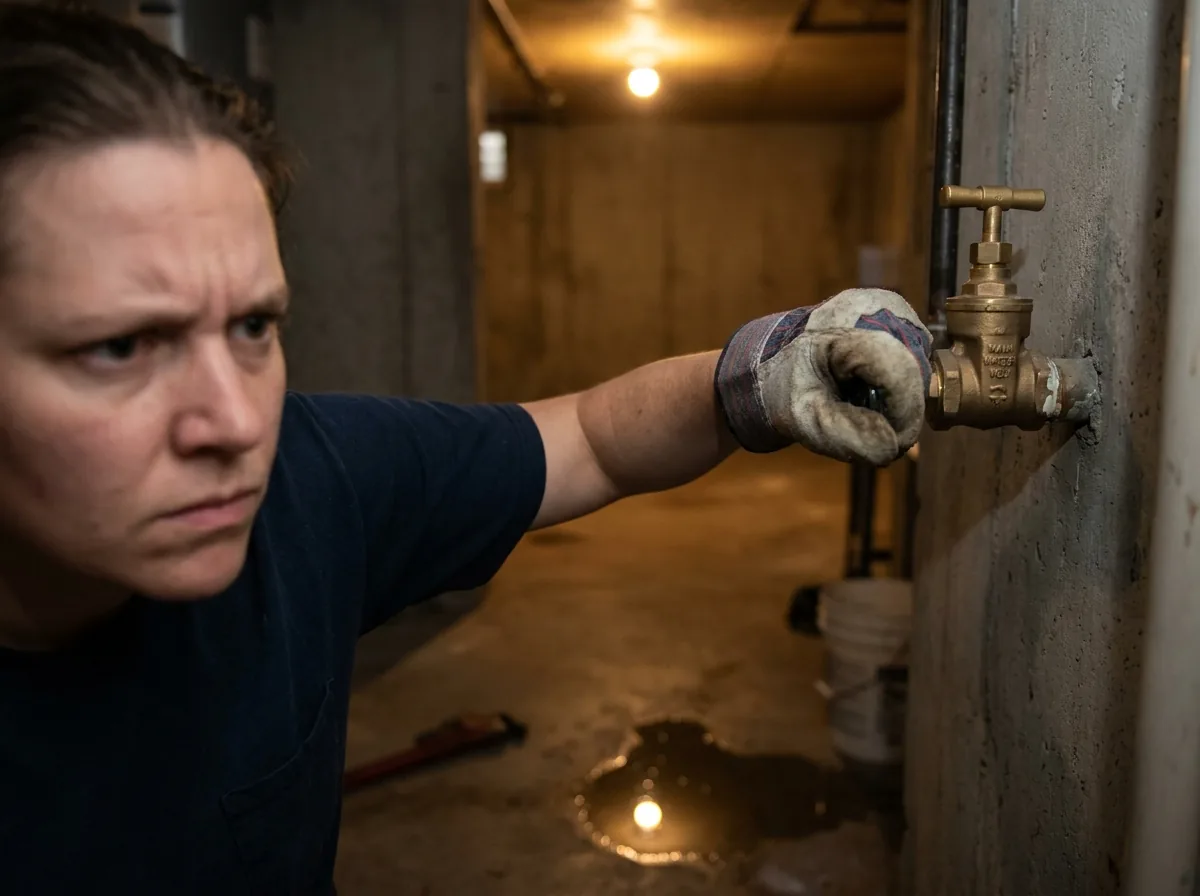
- Shut off the main water supply valve immediately. Every homeowner should know where this valve is located before an emergency happens.
- If water is near any electrical wiring, outlets, or fixtures, turn off the electricity to the affected area at the breaker box.
- Open all faucets to drain the remaining water from the system and relieve pressure.
- Document everything with photos and videos for your insurance claim.
- Contact a licensed plumber for repairs, and call your homeowners insurance provider as soon as possible.
- If the water damage is significant, bring in a professional water damage restoration service to dry out the affected areas and prevent mold growth.
For emergencies that happen outside business hours, an emergency plumber who offers 24/7 service can stop the water and begin repairs immediately.
How to Prevent Pipes from Bursting
Insulate Vulnerable Pipes
Wrap pipes in crawl spaces, attics, basements, garages, and along exterior walls with foam insulation sleeves or pipe insulation tape. This is the simplest and most effective protection against freezing.
Regulate Water Pressure
Install a pressure reducing valve if your home's water pressure exceeds 60 psi. Check it periodically with a gauge attached to an outdoor faucet. Keeping pressure between 40 and 60 psi protects your entire plumbing system.
Maintain Your Plumbing System
Schedule an annual inspection with a licensed plumber, especially if your home has older galvanized steel or iron pipes. Use mesh drain screens to prevent clogs. If you live in an area with hard water, consider installing a water softener or filtration system to reduce mineral buildup inside your pipes.
Winterize Before Cold Weather
Before freezing temperatures arrive, disconnect all outdoor garden hoses. Let faucets connected to vulnerable pipes drip slowly during cold snaps. Open cabinet doors under sinks on exterior walls to let warm air circulate around the pipes. Keep your thermostat set to at least 55°F, even when traveling.
Does Homeowners Insurance Cover Burst Pipes?
In most cases, yes. Standard homeowners insurance policies typically cover sudden and accidental water damage from pipe failures, including the cost of repairs and water damage restoration. However, insurance companies usually deny claims when the damage was caused by obvious neglect or lack of maintenance, such as failing to heat your home during winter or ignoring known plumbing issues.
Always document the damage thoroughly with photos and video. Keep all receipts for emergency repairs. File your claim as soon as possible after the incident.