Sunrise Plumbing Riverside
Water pressure regulator repair in Riverside, CA
Licensed · Bonded · Insured Gauge Tested, Not Guessed

Water Pressure Regulator Repair in Riverside, CA

It starts with one brass valve on your main line. When it drifts, your whole building feels it at once — showers go weak, or pipes bang and faucets drip because pressure climbed past what your plumbing was built to carry. Our licensed plumbers put a gauge on your system, test the valve itself, then repair or replace only the part that tested bad.

50–70 psiNormal household range
CPC 608.2Code compliant valves
1 yrWorkmanship warranty
We arrive with a gauge Not a guess.

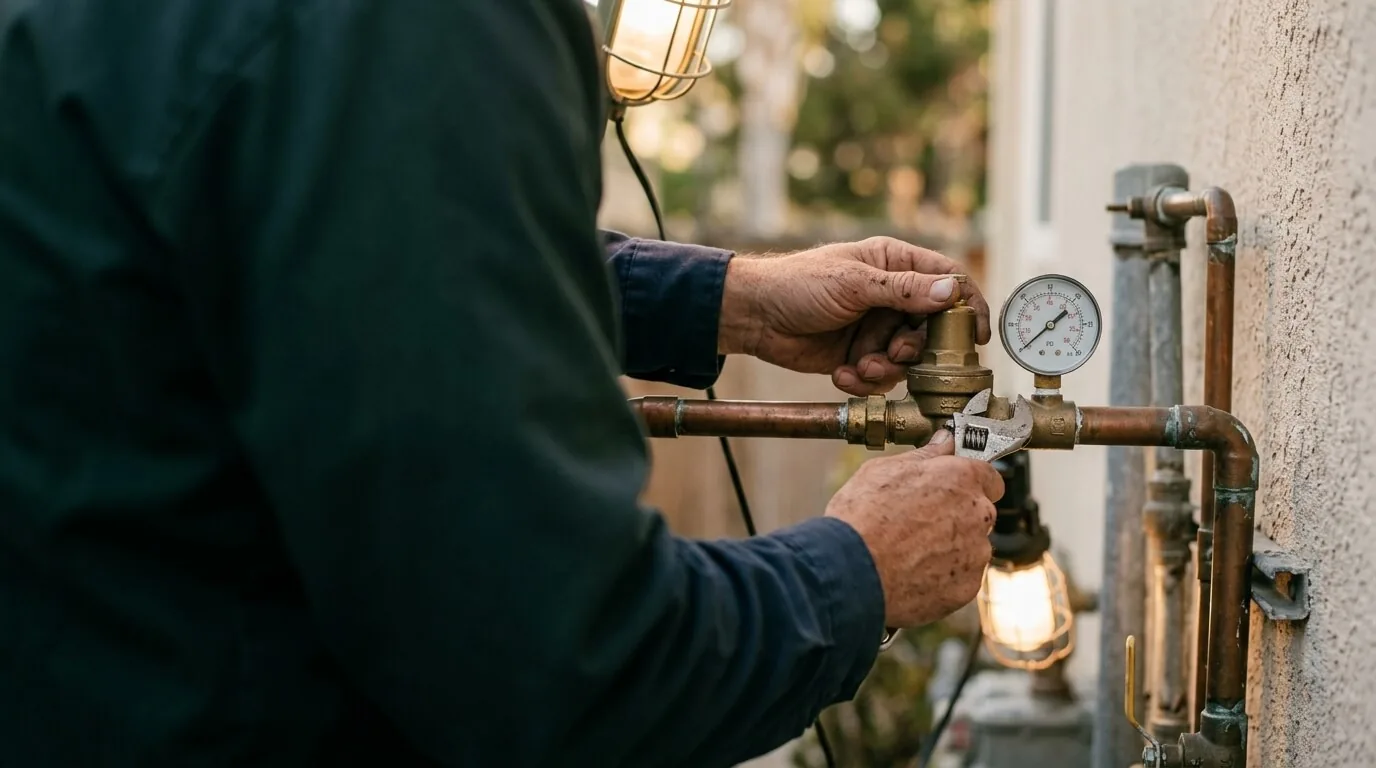
A pressure regulator, also called a PRV, steps city pressure down to a level household plumbing can carry. We gauge test static pressure at a hose bibb, check whether the valve still responds to its adjustment screw and holds, then adjust, replace or install a brass regulator. Every job carries a one year workmanship warranty. Call (858) 599-0256 now — we answer 24 hours, every day, holidays included.

Warning Signs

Signs Your Pressure Regulator Is Failing

This valve fails in two directions, and both cost you money.

Pressure drifting high

Pipes bang or thump when a faucet shuts off. Faucets keep dripping after you close them. Toilets run on their own between flushes. Supply lines, washer hoses and fixtures fail early. Water discharges from the relief valve on your water heater. Flow feels forceful and loud at every tap. Showers spray harder than they used to.

Pressure drifting low

Whole building went weak, hot and cold alike. Shower fades the moment someone opens a sink. Readings swing strong to weak through the day. Tubs, washing machines and dishwashers take longer to fill. Sprinklers no longer reach where they once did.

The valve itself

Water weeps from the valve body or the adjustment screw. Turning the adjustment screw changes nothing. Two readings taken an hour apart sit far apart. A wet or muddy patch sits over a buried valve. Corrosion has crusted the body and the union nuts.

One weak fixture with everything else normal points to that fixture, not this valve. Symptoms landing everywhere at once put the regulator first on the list, and that difference decides where we start looking.

Pressure or Volume: Two Different Problems

This distinction saves Riverside customers real money, and almost nobody explains it before quoting. Pressure is force. Volume is how much water actually moves. A gauge can read a healthy 60 psi while your shower still runs weak, because pressure sitting still and pressure under demand are different measurements. We take a static reading with everything closed, then open a fixture and watch how far the needle drops.

A number that holds steady means pressure is fine and something is choking the flow, usually scale inside the pipe or a restricted valve. A number that collapses the moment water moves means the supply itself cannot keep up. Same symptom in your shower, two completely different repairs, and only a gauge tells them apart. This is exactly why a phone quote is guesswork.

Sudden Drop or Slow Fade

Timing narrows the cause almost as much as location does. Pressure that fell overnight points to something that broke or moved — a regulator diaphragm that finally gave out, a valve someone closed and forgot, a supply line that started leaking, or utility work happening on your street. Sudden changes have sudden causes, and they are usually findable in one visit.

Pressure that faded across years points to buildup. Scale narrows pipe a little at a time, aerators load up with grit, and a regulator drifts slowly as its spring tires. Nobody notices a five percent loss each year until the shower finally becomes unbearable. Pressure that comes and goes by time of day often is not your plumbing at all — peak demand, elevation, and your position on the distribution system all shift what arrives at your meter.

Local Causes

Why Regulators Fail in Riverside

Age alone tells you very little. Conditions do most of the damage, and Inland Empire conditions are hard on this valve.

Hard water & mineral scale

Inland water carries a heavy mineral load. Scale builds on the seat, the diaphragm and the spring, and a valve that cannot seat cleanly cannot hold a setting.

Grit and debris

Sand and rust travel the main after utility work or a nearby break. Particles lodge against the seat, which is exactly why code asks for a strainer ahead of the valve.

Constant cycling

Your regulator modulates every time water moves in the building. Rubber and spring steel fatigue under that duty, and commercial properties with heavy daily demand wear valves faster.

A rushed original install

Missing strainer, no unions, no isolation valve, or a body buried in dirt. Each shortcut shortens the life of the valve and raises the cost of the next service call.

Thermal expansion with nowhere to go

Adding a regulator closes your system. Heated water expands, and with no expansion control that force pushes back against the diaphragm and the water heater relief valve.

Corrosion around the body

Galvanized service piping in older Riverside neighborhoods corrodes at the threads, and a valve fighting corroded connections rarely comes out clean.

What's Included

What Water Pressure Regulator Repair Riverside CA Covers

We work the valve and everything it touches, from the meter to the fixtures it feeds.

Adjustment and repair

A healthy valve responds to its adjustment screw and holds the new setting. Where testing shows that, adjustment is your fix. We set the system inside a safe household range, then verify the reading at several fixtures.

PRV replacement

Regulators are wear parts, not permanent fittings. Once the internal diaphragm hardens, turning the screw stops helping. We shut the main, cut out the old body, fit a brass regulator with fresh unions and seals, then pressure test the joint.

Pressure regulator installation

Some properties never had one, or lost theirs during a past repair. We cut into the service line, set the valve on unions, add an isolation valve where one is absent, fit a strainer ahead of the valve, then confirm readings across the building.

Relocating a buried or hidden valve

Plenty of Riverside valves sit under a slab, inside a wall, or buried in dirt with no box around them. We move it to an accessible spot, turning a future repair into minutes of work instead of hours.

Commercial regulator work

Restaurants, offices, salons and industrial sites run larger valves under heavier demand. Failures there hit revenue, not just comfort. Larger bodies and higher flow change the parts and the access.

Water pressure repair beyond the valve

Sometimes the gauge clears the regulator and points elsewhere. Seized gate valves, corroded angle stops, scaled aerators, a restricted softener, an undersized service line, or a hidden leak all read as a regulator problem until someone measures properly.

Diagnosis

Repair or Replace: How We Decide

What We FindWhat It MeansWhat We Do
Valve responds to adjustment and holdsInternals still healthySet it and verify at multiple fixtures
Screw turns, reading will not moveDiaphragm has hardenedReplace the valve body
Two different readings an hour apartValve is driftingReplace the valve body
Water weeping at the body or screwInternal seal has failedReplace the valve body
Reading above 80 psi with no valve presentCode calls for oneNew install with a strainer ahead of it
Valve tests fine, pressure still wrongRestriction sits elsewhereIsolate room by room and repair the real cause
Valve buried, in a wall or under a slabFuture service gets expensiveReplace and relocate to an accessible spot
Relief valve dripping after a recent installClosed system, no expansion controlAdd expansion control and retest

Process

How We Test Before We Touch Anything

Guessing on this valve gets expensive fast. Our order runs the same way on every call.

1

What changed, and when

We ask what changed, when it changed, and whether the whole building feels it or one fixture.

2

Static pressure reading

A gauge goes on an outside hose bibb, reading static pressure with nothing running.

3

Second reading near the meter

Separates a city side issue from a house side issue.

4

Fixture test

Opening a fixture shows how far the reading falls, which splits a pressure problem from a volume problem.

5

Valve inspection

We locate the valve and inspect the body for weeping, corrosion and adjustment travel.

6

Screw response test

Turning the screw tells us whether the internals still respond and hold the new setting.

7

Hot vs. cold comparison

Comparing hot against cold moves a hot only complaint to the water heater and its shutoffs.

8

Shutoff and meter check

Checking the main shutoff and meter valve for full travel rules out the cheapest cause on the list.

You see every reading, hear what it means, and get a firm number before any work begins. Call (858) 599-0256 and we arrive with a gauge, not a guess.

Check Your Own Pressure in Two Minutes

You can narrow this down before we arrive. Thread an inexpensive pressure gauge onto an outside hose bibb, shut off every fixture and appliance inside, then open the bibb fully and read the dial.

A reading between 50 and 70 psi sits in normal territory. Above 80 psi means code wants a working regulator on that line. Below 40 psi with a valve present suggests the regulator is strangling the building. A needle that will not settle points at a failing diaphragm.

Write the number down and tell us on the call. Knowing your reading shortens the visit and makes the quote conversation concrete.

The Numbers

What the California Plumbing Code Asks For

Section 608.2 of the California Plumbing Code calls for an approved pressure regulator, preceded by an adequate strainer, wherever static supply pressure runs above 80 psi, and it must bring that pressure to 80 psi or less. Valves an inch and a half and larger skip the strainer requirement. Potable water regulators meet ASSE 1003.

50–70psi normal range
80psi code ceiling
608.2CPC section
ASSE 1003Regulator standard

Two details most pages skip. That strainer keeps grit off the seat, so leaving it out shortens the life of a brand new valve. Fitting a regulator also closes your system, which means expansion from your water heater needs somewhere to go. We check both, because ignoring either one brings us back on a warranty call we could have prevented.

Who This Fits

Who This Service Fits

Homeowners

Noticing weak showers, banging pipes, or fixtures that keep needing repair.

Landlords & property managers

Would rather replace one valve than field repeated tenant calls and pay for split supply lines. Tenant reports rarely agree, so we test each affected unit and the common supply.

Business owners

Running kitchens, salons and offices where pressure problems interrupt the day. We schedule around your hours where the repair allows, and our 24 hour availability means pressure loss does not have to wait for morning.

Buyers & sellers

Who need a pressure reading and a working regulator documented before escrow closes.

What to Check Before You Call

None of this is required, and all of it makes your visit faster. Run every fixture and note which are weak, hot side and cold side separately. Check whether the main shutoff and the meter valve are fully open. Ask a neighbor whether their pressure changed too, which points to the city side. Note when the change happened and whether any plumbing work preceded it. Look for warm spots on the floor and listen for running water in a quiet house.

Skip the pressure boosting pumps sold online. Adding force upstream of a restriction does not remove the restriction, and on a system with a failing regulator it can make the damage worse.

Waiting Costs More Than Fixing

Weak pressure feels survivable, which is exactly why this repair gets postponed. Meanwhile the same worn valve that starves your shower can drift the other direction and start splitting supply lines while nobody is home. High pressure shortens water heater life, wears faucet seals, loosens toilet valves and drives water hammer through your pipes every time a tap closes. Small parts fail first, then a hose lets go behind a washing machine. Ten minutes with a gauge tells you which situation you are in, and the fix is a fraction of what water damage costs.

Why Choose Us

Why Riverside Property Owners Choose Us

Riverside plumbing since 2011

We know which streets run galvanized and where pressure sits high.

Licensed, bonded, insured

CSLB C36 California plumbing contractor, verified technicians.

Open 24 hours

Every day, holidays included.

25–55 minute arrival

Measured in normal traffic, with your window given on the call.

No surprise pricing

Your number comes first and it holds.

One year warranty

No labor charge on a return visit. $50 off your first service.

Our promise is three words. We make it right.

Pricing

How We Price This Work

Pricing is quote based. A valve needing a turn of the screw and a buried valve needing excavation, replacement and relocation are different jobs, so a phone figure would be a guess. We measure first, show you the readings, then hand you a firm price for the specific repair.

Worried you will be sold more than you need? Fair concern, and the gauge settles it. Where your valve still responds and holds its setting, we adjust it and tell you plainly that replacement is not needed. Should the reading clear the regulator entirely, we keep looking rather than swapping out a good part to close a ticket.

Request Your Quote · Call (858) 599-0256

Keeping Pressure Steady After the Repair

Hard water works against every valve in the Inland Empire. Thread a gauge on the hose bibb once a year and note the reading, so drift shows up before it does damage. Exercise the main shutoff and angle stops so they do not seize part open. Flush the water heater on schedule to keep sediment away from the hot side. Watch the meter with everything off, because movement means a leak. Have the valve checked when the property changes hands or after any main line work. Listen for water hammer returning, which is usually the first sign of drift.

Utility work explains some temporary drops. Riverside Public Utilities serves much of the city and Western Municipal Water District covers surrounding areas, so flushing or a main repair nearby can move your reading for a day.

When Testing Points to Bigger Work

Sometimes the valve is fine and the pipe is the bottleneck. In an older Riverside home running original galvanized, every fixture is weak, water runs rusty after a vacation, and pressure crashes the second another tap opens. Replacing the regulator there would not fix your problem, and we say so rather than selling it. In that case we quote a partial or full repipe in copper or PEX, with the option to phase the work. Losing a small repair beats selling one that will not hold.

Coverage

Serving Riverside and the Surrounding Cities

We cover 92501, 92503, 92504, 92505, 92506, 92507 and 92508, plus twenty one neighboring Inland Empire cities. Pressure across Riverside varies with elevation and where a property sits on the distribution system, so the reading at your own hose bibb is the only number that settles the question. The Wood Streets went up from 1913, and those Victorian and Craftsman homes carry original galvanized lines alongside valves that have been in service far too long. Arlanza is post war tract housing near the 91, where plenty of original regulators still sit on the main. Canyon Crest and Orangecrest are newer, so hard water scale inside the valve outranks corrosion there.

La Sierra Moreno Valley Corona Norco Eastvale See all 21 cities →

FAQ

Questions Riverside Customers Ask

Who is responsible for the pressure regulator, me or the city?

You are. Riverside Public Utilities and Western Municipal Water District maintain the system up to the meter. Everything past it, including the regulator, belongs to the property owner. That answer surprises most callers, so we give it early rather than after the visit.

Can the valve be adjusted instead of replaced?

Often yes. A healthy regulator responds to its adjustment screw and holds the new setting. Once the diaphragm hardens, adjustment stops holding and replacement becomes the lasting answer. Testing tells us which one you have before we recommend either.

What pressure should my house run?

Most households sit comfortably between 50 and 70 psi. Section 608.2 of the California Plumbing Code caps static pressure at 80 psi, because above that figure fittings, supply lines and appliances start failing early.

Where is my regulator?

Usually a bell shaped brass valve on the main line near the meter or the front hose bibb. Garages, walls, closets and irrigation boxes hold plenty of them too. Some Riverside properties never had one installed at all, and a gauge reading tells us whether yours needs one.

Should I adjust the screw myself?

We would rather you did not. Turning an old adjustment screw can stop a tired valve completely or start a leak, and without a gauge on the system you cannot see what the change actually did. Reading your pressure is the safe part, and we handle the setting.

Why does my water heater relief valve drip after a new regulator goes in?

Fitting a regulator closes your system, so heated water has nowhere to expand. Expansion control handles it. We check for this on every install rather than leaving you with a new drip and a mystery.

Does high pressure really damage anything?

Yes. Pressure above what fixtures are rated for wears seals, splits supply lines, shortens water heater life and drives water hammer through your pipes. Correcting the valve protects everything downstream of it.

My pressure is only bad in one shower. Is that this valve?

Probably not. When the rest of the building reads normal, the restriction sits at that fixture. Aerators, cartridges and angle stops cause most of those calls, and they are quick repairs.

Are you available at night or on a holiday?

Yes. We stay open 24 hours, every day, holidays included.
Book Your Riverside Regulator Repair

Weak flow or banging pipes, both trace to the same valve

Both start with a gauge. Licensed, bonded and insured, open 24 hours, priced before we start, warrantied a year. First time customers take $50 off.

Call (858) 599-0256 Now
Call (858) 599-0256 Get Estimate